
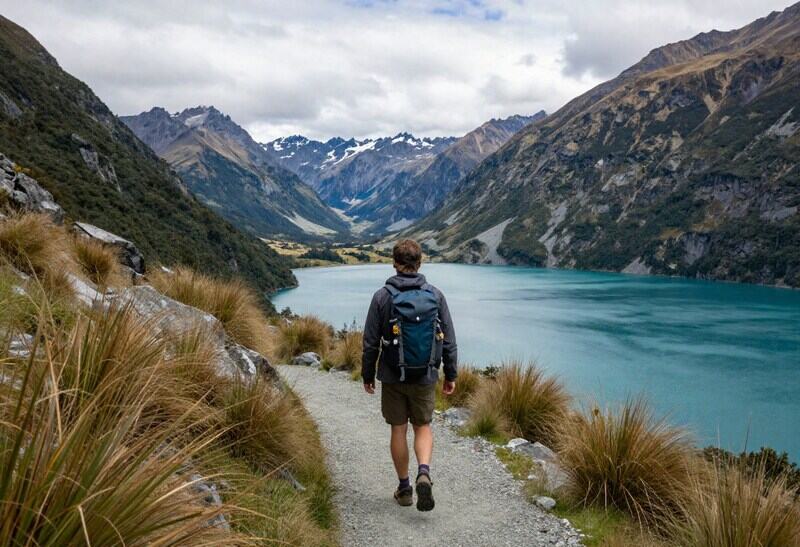
TLDR: Solo travel in 2026 has moved well beyond hostels and gap year backpacking. A new generation of independent travelers is choosing destinations based on safety, cultural richness, connectivity, and genuine value. Thailand, Morocco, and Australia sit at the top of that list for very different reasons. This guide covers 7 destinations redefining solo travel this year, with practical advice on staying connected through Mobimatter eSIM plans.
Solo travel has changed its character completely over the past several years. The people traveling alone in 2026 are not exclusively young backpackers on a gap year budget. They are professionals taking sabbaticals, remote workers building location-independent careers, retirees exploring destinations they deferred for decades, and divorced or widowed individuals rediscovering their independence through travel. The profile is broader, the expectations are higher, and the infrastructure supporting solo travelers has responded accordingly across almost every major destination.
What has not changed is that connectivity remains the single most important practical foundation for solo travel. When you are traveling alone, your phone is your navigation system, your translator, your emergency contact, your booking platform, and your connection to people back home. Losing data access while solo in an unfamiliar city is a fundamentally different experience from losing it as part of a group. For solo travelers heading to Southeast Asia, activating an eSIM Thailand through Mobimatter before departure ensures that connectivity is working from the moment you land at Suvarnabhumi or Don Mueang airport, with no dependency on airport kiosks, hotel WiFi, or finding a convenience store that sells local SIM cards.
1. Thailand: The Solo Traveler’s Default for Good Reason
Thailand remains the most visited solo travel destination in Southeast Asia in 2026 because it combines genuine cultural richness, excellent food, world-class beaches, and an infrastructure that is specifically built to serve independent travelers at every budget level.
The argument for Thailand as a solo destination is almost too easy to make. Bangkok is one of the world’s great cities for independent exploration, with a street food culture that means you can eat extraordinarily well for a few dollars per meal, a public transport network that has improved significantly with BTS and MRT expansions, and a density of things to see and do that rewards weeks of exploration without repetition.
Beyond Bangkok, the diversity of experience available within Thailand’s borders is remarkable. The mountainous north around Chiang Mai and Chiang Rai offers a completely different cultural and physical landscape from the south. The Gulf of Thailand islands like Koh Samui and Koh Tao attract divers and beach travelers. The Andaman coast destinations including Krabi, Phuket, and the Phi Phi islands offer some of the most photographed coastal scenery in the world. And the northeastern Isan region remains largely unexplored by foreign tourists, offering an authentic Thai experience that the more popular destinations have partly lost.
What makes Thailand particularly well-suited to solo travelers:
- Extremely well-developed tourist infrastructure at all budget levels
- Strong solo traveler community with easy social opportunities
- Low cost of living making budget extension simple
- Excellent domestic transport options including trains, buses, and budget airlines
- High personal safety for solo travelers including solo women
- World-class food culture accessible at street level
2. Morocco: The Solo Adventure That Keeps Delivering Surprises
Morocco rewards solo travelers who approach it with curiosity and patience. The contrast between the ancient medinas, Sahara desert landscapes, Atlantic coastline, and mountain villages makes it a destination with genuine internal variety that sustains interest across extended stays.
The medina of Fez is often cited as the most complete medieval city in the Arab world, and experiencing it as a solo traveler without the compromise of group touring schedules is genuinely different from any other way of visiting. You can spend an entire morning watching leather being dyed in the tanneries, lose yourself in alleyways that have looked the same for six hundred years, and eat lunch in a tiny local restaurant that no organized tour would ever include, all because you had no agenda except your own curiosity.
Morocco does require more active navigation of its social dynamics than Thailand or Australia. Persistent attention from guides and vendors in medina areas can feel overwhelming for first-time solo visitors. The approach that works best is confident, friendly, and brief engagement combined with a clear sense of where you are going. Learning a handful of phrases in Darija, the Moroccan dialect of Arabic, transforms how locals respond to you almost immediately.
The solo travel infrastructure in Morocco has improved significantly. Riads converted to guesthouses in Marrakech, Fez, and Essaouira offer intimate accommodation with hosts who genuinely look after solo guests. The train network connecting Casablanca, Rabat, Fez, and Marrakech is comfortable and reliable. And the growing digital nomad scene in Marrakech means you are unlikely to spend long without meeting other independent travelers if you want company.
3. Australia: Solo Travel at the Largest Scale
Australia offers solo travelers a destination that combines first-world infrastructure and personal safety with landscapes and wildlife encounters that exist nowhere else on earth. The scale of the country means it genuinely rewards multiple trips rather than a single comprehensive visit.
The solo travel experience in Australia is defined by its extremes. Sydney and Melbourne are world-class cities with excellent food, cultural institutions, and urban exploration possibilities. But drive a few hours in any direction and the landscape shifts dramatically toward something that feels genuinely remote and ancient. The Red Centre around Uluru, the Daintree Rainforest in Queensland, the Kimberley region of Western Australia, and the Great Ocean Road in Victoria all deliver experiences that have no equivalent elsewhere.
Australia is not a budget destination by Southeast Asian or North African standards. Accommodation, food, and transport costs are comparable to Western Europe and higher in some cases. But the quality of experience, personal safety, and English-language accessibility make it a destination where the value equation works differently from pure cost comparisons. Many solo travelers fund Australia trips by working while they are there through working holiday visas, which allows extended stays that amortize the higher cost over a longer and richer experience.
Here is how the three featured destinations compare for solo travel across key criteria:
| Criteria | Thailand | Morocco | Australia |
| Budget friendliness | Very High | High | Low to Medium |
| English accessibility | High | Medium | Very High |
| Solo safety rating | High | Medium-High | Very High |
| Cultural immersion depth | High | Very High | High |
| Connectivity infrastructure | Very Good | Good | Excellent |
| Visa accessibility | Easy | Easy | Moderate |
| Nomad community strength | Very Strong | Growing | Strong |
4. Portugal: Europe’s Most Welcoming Solo Destination
Portugal has consistently ranked at the top of solo travel safety indices for several years and in 2026 it remains the easiest entry point into European solo travel for those who want the cultural richness of an old-world destination without the complexity or cost of more heavily visited European countries.
Lisbon and Porto are both highly walkable cities with excellent public transport, thriving food scenes, and a local population that is notably warm toward foreign visitors. The Portuguese attitude toward solo dining, solo bar visits, and solo sightseeing is notably relaxed compared to some other Southern European cultures, making the experience of being alone in public spaces feel comfortable rather than conspicuous.
The Alentejo region, the Algarve coastline, the Douro Valley, and the islands of Madeira and the Azores give Portugal a geographic range that sustains interest well beyond a single trip. Madeira in particular has developed a strong reputation as a solo traveler and digital nomad destination, with its dramatic volcanic landscape, year-round mild climate, and growing infrastructure for remote workers.
5. Japan: Solo Travel With the World’s Best Transport System
Japan is often described as the perfect solo travel destination because the combination of personal safety, transport efficiency, food quality, and cultural depth creates an experience where being alone is genuinely an advantage rather than a limitation.
Navigating Japan solo means you move at exactly the pace you want, spend as long as you choose at any temple, market, or neighborhood, and eat at tiny counter-seating restaurants that are specifically designed for solo diners in a way that no other country has quite replicated. The ichiran ramen booth, the sushi counter, the standing bar, all of these formats actively reward solo presence rather than treating it as an unusual circumstance.
The Japan Rail Pass system makes multi-city solo itineraries straightforward to execute and cost-effective for trips covering multiple regions. Tokyo, Kyoto, Osaka, Hiroshima, Nara, and the Japanese Alps are all connected by the Shinkansen network in a way that makes ambitious solo itineraries genuinely achievable within two to three weeks.
6. Colombia: South America’s Solo Travel Revelation
Colombia’s transformation over the past fifteen years has been one of the most dramatic in global travel. Medellín and Cartagena in particular have become fixtures on solo traveler itineraries in a way that would have been unthinkable two decades ago, and the infrastructure supporting independent travel has developed accordingly.
Medellín’s cable car system, innovative urban planning, warm climate, and extraordinarily welcoming local population create a solo travel experience that surprises almost everyone who visits with preconceptions shaped by older narratives. The city’s commitment to reinvention is visible and tangible in a way that makes exploring it feel genuinely inspiring rather than simply pleasant.
Cartagena’s walled old city, colonial architecture, and Caribbean coast access give Colombia’s second major solo travel hub a completely different character. The combination of these two cities alone, separated by an hour’s flight, gives solo travelers in Colombia more variety than many countries offer across their entire territory.
7. Connectivity Is the Foundation Every Solo Trip Needs
Solo travelers have less margin for error than group travelers when connectivity fails. Having a reliable, pre-activated eSIM plan from Mobimatter before departure is the single highest-impact practical preparation step any solo traveler can take.
The solo traveler’s dependency on mobile data is qualitatively different from a group traveler’s. When you are alone, your phone handles navigation, translation, accommodation confirmation, emergency communication, and social connection simultaneously. A connectivity failure that a group of four can navigate collectively becomes a genuine solo problem that eats time and creates stress in an unfamiliar environment.
Morocco is a destination where pre-arrival connectivity preparation matters more than most. The medina areas of Fez and Marrakech are genuinely complex to navigate without GPS, and having maps working immediately on arrival makes the difference between an overwhelming and an exhilarating introduction to the country. Activating an eSIM Morocco through Mobimatter before your flight means your navigation is running before you step outside the airport, which sets the right tone for everything that follows.
For solo travelers making the journey to Australia, the distances involved make connectivity planning even more critical. Driving between cities or exploring national parks without reliable mobile data access is genuinely risky in a country where remote areas can be hundreds of kilometers from the nearest town. Having an eSIM Australia from Mobimatter activated and ready before you land at Sydney, Melbourne, or Brisbane airport ensures you have coverage on major transport corridors and in urban areas from day one, with a plan sized appropriately for the data-intensive navigation that Australian distances demand.
Frequently Asked Questions
Is Thailand safe for solo female travelers in 2026?
Thailand is generally considered one of the safer destinations in Southeast Asia for solo female travelers. The well-developed tourist infrastructure, high visibility of other travelers in popular areas, and generally respectful local culture contribute to this reputation. Standard solo travel awareness practices apply, particularly after dark in entertainment districts, but negative incidents are relatively uncommon relative to visitor numbers.
Does Mobimatter offer eSIM plans for all three featured destinations?
Yes. Mobimatter offers dedicated eSIM plans for Thailand, Morocco, and Australia, each partnering with local carriers to provide reliable coverage across major cities and tourist corridors. Plans are activated via QR code before departure and connect automatically to supported local networks on arrival.
What is the minimum budget for solo travel in Australia per day?
Budget solo travel in Australia on a hostel and self-catering basis typically runs $60 to $90 AUD per day in major cities, which translates to roughly $40 to $60 USD at current exchange rates. This covers a hostel dorm bed, basic meals, and local transport. Travelers with more flexibility typically budget $100 to $150 AUD per day for private accommodation and more varied dining.
How many eSIM profiles can I have active simultaneously on my phone?
Most modern smartphones support storing multiple eSIM profiles but typically only allow one or two to be active at the same time. This means you can pre-load Mobimatter plans for your entire itinerary and switch between them as you travel, without purchasing or scanning new QR codes at each destination. Managing all your travel eSIMs from a single Mobimatter account makes this process straightforward.
Which solo travel destination in this list is best for first-time solo travelers?
Thailand is the most commonly recommended starting point for first-time solo travelers, particularly those from Western countries. The combination of easy visa access, excellent English in tourist areas, world-class food at every price point, strong solo traveler community, and high personal safety creates a forgiving and rewarding introduction to independent travel that builds confidence for more complex destinations afterward.
Keep an eye for more latest news & updates on My Stories List!
 khizar Seo